If you're ready to give up on your goals…
It’s about this time of year when the bright, new goals we set ourselves at the start of January begin to fade away.
In some cases, we may have set the wrong goals, or perhaps we didn’t give enough thought to how we were going to do them, or have enough plan Bs in place.
Perhaps it’s because the optimism that usually comes in January on the back of the holidays and that feeling of a fresh start, the one that thinks the future us will have more energy, more time and better habits, is fading.
With the ‘new year, new me’ energy reducing, February can be a really good time to tweak the goals we set. Not in a big, reset way, the kind we do at the end of each quarter, more of a course correction.
You’ve now had a whole month of this new year to get back into and understand your routines. You’re familiar with your energy levels, your schedule and the systems that are either supporting you or getting in the way.
We often feel that we have to keep going with the goals we’ve set, otherwise we failed. That we can only change them once a year (or if you’re like me, once a quarter).
However, as long as you’re doing it for the right reasons, you can change your goals any time you like.
The goal I’ve already changed this year
At the beginning of February, just a third of the way into Quarter 1, I’ve already changed one of my goals for the year.
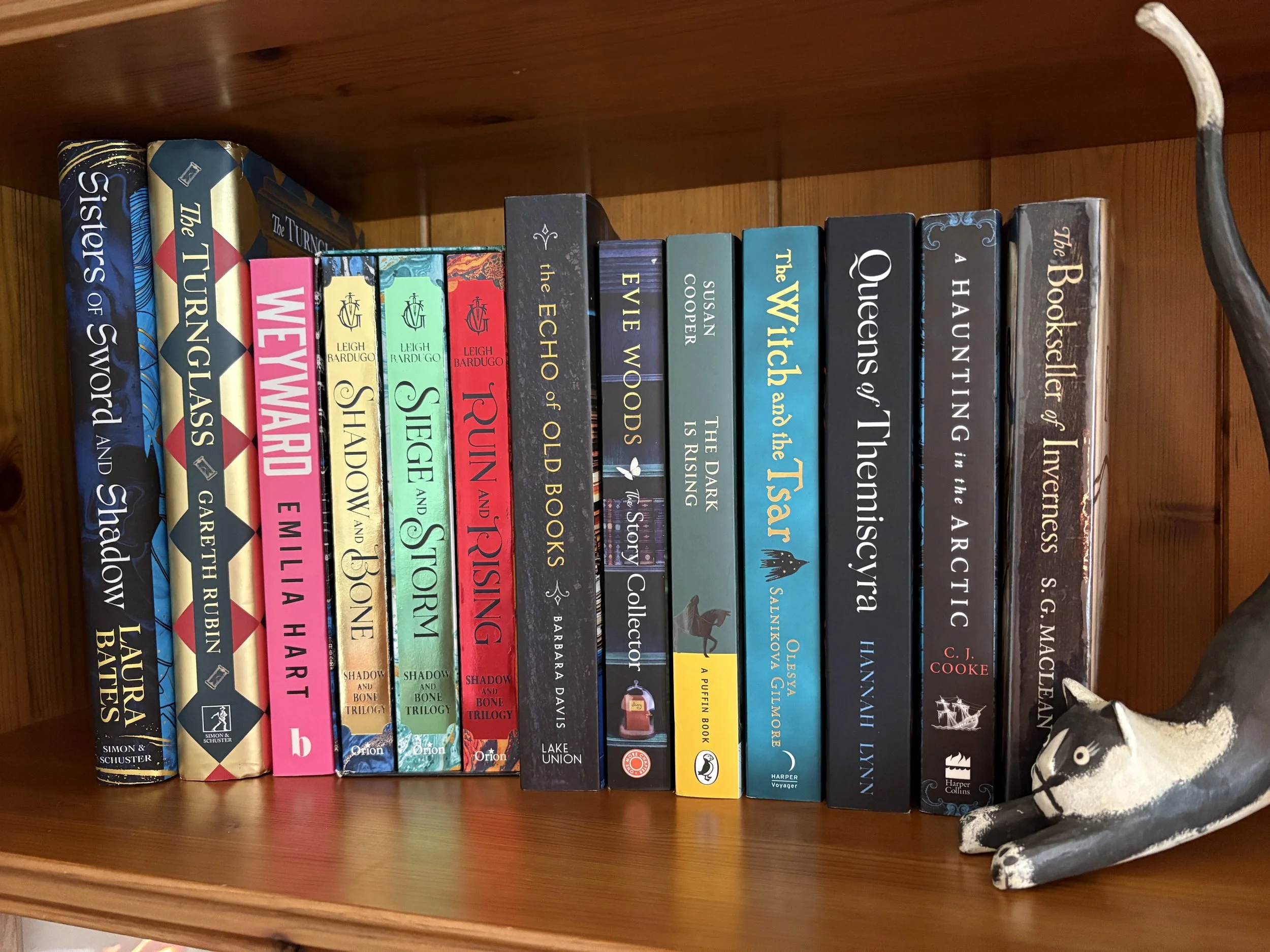
At the start of the year, I set myself the goal of reading 40 books in 2026. I managed 36 in 2025, so wanted to stretch myself this year.
I tried really hard in January and read 3 books and listened to half a one. When I heard 2 people I know had already read 9 books I have to be honest, I felt a bit deflated.
Then I saw a comment on one of their posts about decluttering books and what to do if you found it hard. The commentator couldn’t understand why someone would ever keep a book they’d already read.
This is when it hit me.
Realising the goal didn’t fit me
This isn’t about how anyone should read, it’s about noticing how I actually enjoy reading and that’s important. Goals are personal.
I’m not a fast reader and don’t want to be. I like to take my time and I like to remember the books I’ve read, at least for a while. The only way I can do this is to take them slowly. Many people are able to read quickly because they’re in it for the moment, but once it’s read it’s done and they move on.
I’m not like that. It’s similar to how I prefer deeper conversations rather than small talk. There’s nothing wrong with either way, it’s just what our minds prefer.
Why numbers aren’t always the point
Over the years I’ve kept a lot of books and reread quite a few. That’s because they’re not just pieces of paper.
They’re friends, they’re gateways to other worlds, something I’m finding myself needing more and more these days.
I still remember my parents reading to me, and the hours I spent listening to Storyteller tapes when I was little. I was often ill as a child, and stories became my way out of my sick bed. That relationship with books never really left.
So when I looked honestly at my goal, I realised this:
I probably could hit 40 books.
But I’d have to:
· Choose shorter books I wasn’t that invested in
· Rush through stories I actually cared about
· Read for the sake of a number, not the experience
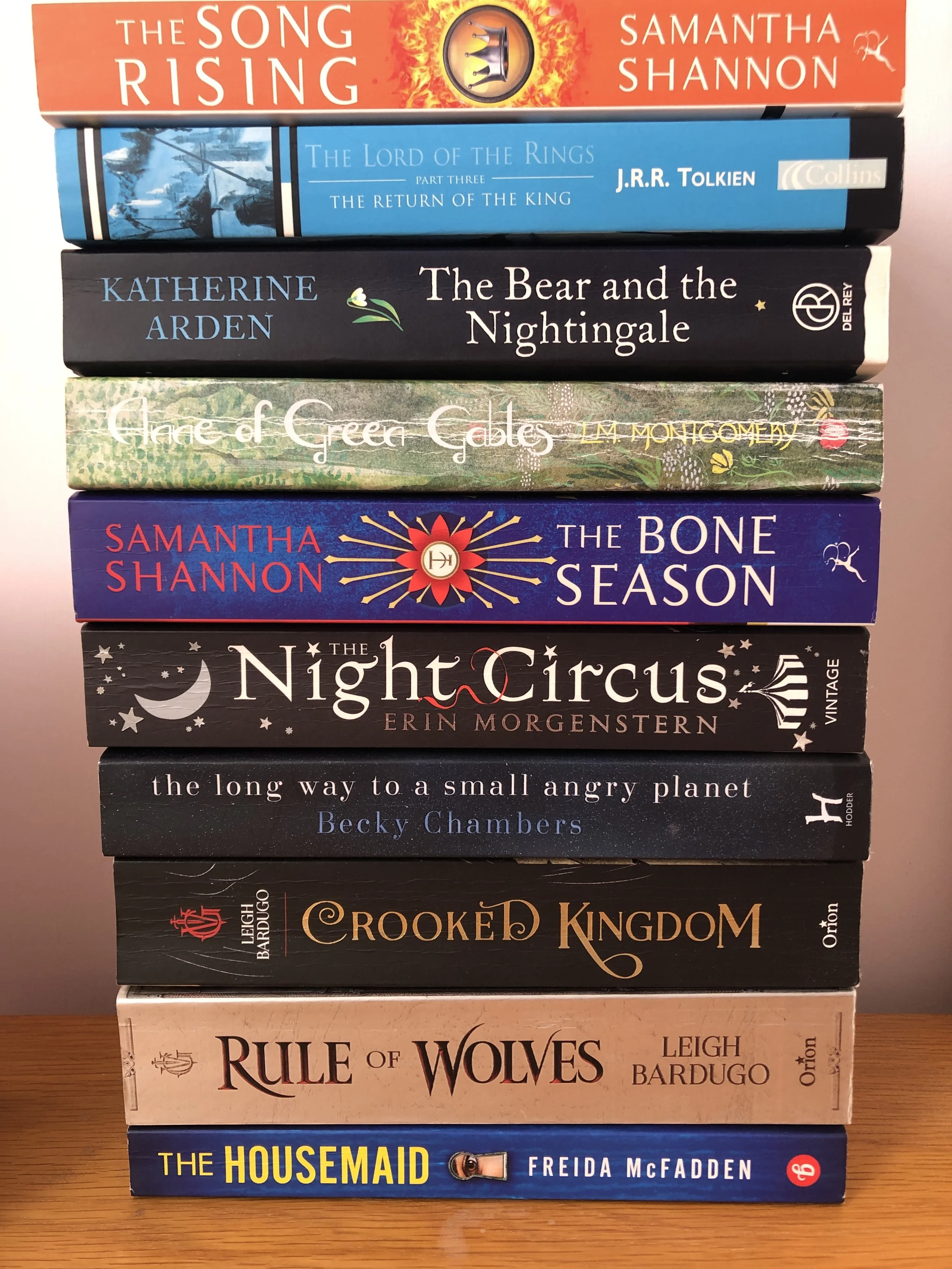
However, I want my reading experience to be different. I’ve been fortunate enough to read some stories that I love and that have kind of spoilt me for other books.
I’m not that interested in reading books I’m not particularly excited by or books just because an influencer says I should, especially not just so I can hit a number I chose and that won’t have any impact on anyone including myself.
I mean honestly, what would change and for whom if I ready 38 books or 55?
Choosing a goal that actually reflects what I want
There are some specific books I’m looking forward to this year. Ones that I have been waiting a long time for, others that are part of a series the author hasn’t finished yet.
I don’t want to rush them. I want to savour them, enjoy the craft, how it’s been written, the characters. I don’t want to spoil that just for a number.
I also don’t want to spend all my time reading. I also love watching YouTube (book dramas, planning videos, vlogs) as well as rewatching my favourite TV shows.
None of this is meant to shame the people who enjoy reading quickly, want to hit certain reading goals, who aren’t too attached to remembering every detail, or can’t tell you a thing about the main character.
As long as they’re happy with that, that’s what matters. I realised I wasn’t happy with that. That’s why I’ve changed my goal.
What this means for your goals
On the surface, changing my reading goal might seem insignificant, but the principle can be applied to all goals.
February gives you something January can’t: evidence.
You’ve already seen what you avoid, what you attempt and where things feel easy or hard. You’ve also noticed how the pursuit of this goal makes you feel. That information matters.
Using it builds trust in yourself.
Every small adjustment that makes follow-through easier strengthens your belief that you can do what you say you’ll do. Not because you forced it, but because you paid attention and responded accordingly.
That belief grows through action, not willpower.
And over time, those repeated actions start to shape how you see yourself. You’re no longer chasing ‘new year, new me’ energy. You’re becoming someone who shows up, tweaks things when needed and keeps going.
Changing your mind doesn’t mean you failed.
Most of the time, it simply means you’ve been paying attention.

A simple February reset
If you want to use February as a reset point, here’s a quick way to do it, no overhaul required.
1. Do a brief audit
What did you avoid in January?
What did you actually try, even if it didn’t go perfectly?
2. Spot the friction Look at both lists and ask:
Where did things feel unnecessarily hard?
What made it easy to avoid the things you wanted to do?
What in your environment supported you and what worked against you?
3. Change one small thing Pick just one or two friction points and ask:
What’s the smallest change that would make this easier?
You’re not fixing everything. You’re choosing the adjustment with the biggest payoff for the least effort.
That’s how goals become sustainable.
If this resonates, it might be worth taking a look at one of your own goals this week not to judge it, but to see whether it still fits who you are right now.
