The Art of Plan B
How to keep going when life gets in the way
We all do it.
We sit down with good intentions, open the diary, and carefully map out the week ahead. Work commitments. School runs. Meals. Exercise. The things we want to do as well as the things we have to do.
And then something happens. A child gets ill. The boiler breaks. A delivery doesn’t arrive. Someone else drops the ball and suddenly you’re picking it up. By mid-morning on Monday, the plan you felt so good about already feels impossible.

Make it stand out
When that happens, it’s very easy to think:
“Well, that’s ruined now.”
And once that thought creeps in, the temptation is to give up completely. To stop trying. To tell yourself you’ll get back to it later.
The problem with “later”
If you’ve ever caught yourself thinking “I’ll start again next week” or “February will be better”, you’re not alone. But here’s the honest truth, shared from experience : this mythical later rarely shows up on its own.
Life doesn’t suddenly become quieter. Responsibilities don’t disappear. The conditions don’t magically become perfect. If things aren’t working now, they usually won’t work later either, unless something changes. And one small change that can make a huge difference is learning how to adapt when your plan falls apart.
Why giving up feels so tempting
Most of us only make one plan. We create a to-do list based on a perfect version of the week, one where everyone stays healthy, nothing unexpected happens, and we have consistent energy from Monday to Friday. So when that plan collapses, it feels like failure. And failure doesn’t exactly encourage motivation.
This is why so many people stop writing lists altogether, or avoid planning properly. It’s not because they don’t care, it’s because they’re fed up of feeling rubbish when life gets in the way.
This is where Plan B comes in
Instead of having one all-or-nothing plan, try having two. Not as a way to lower your standards or to give you extra work, but as a way to stay in the game.
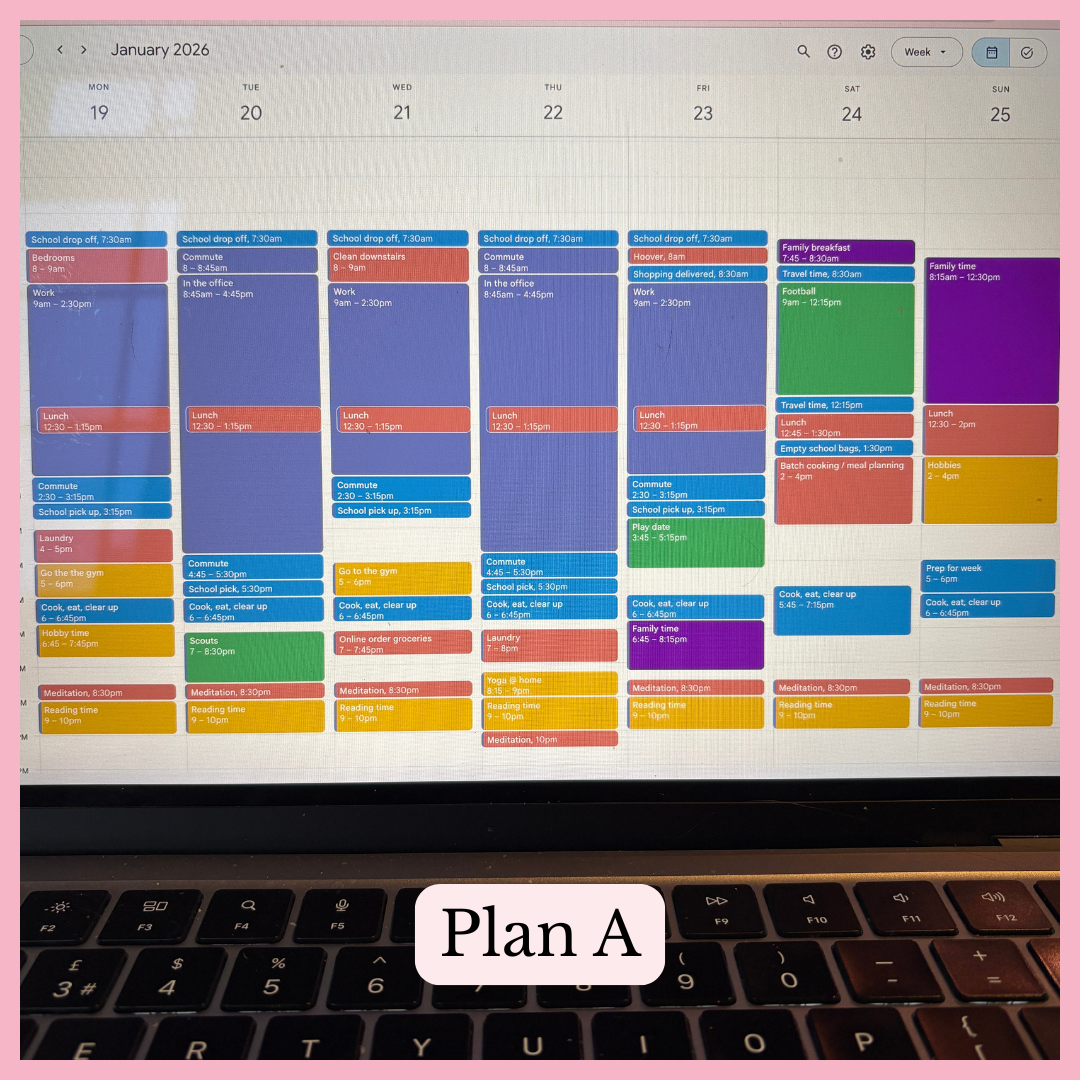
Plan A: The Ideal Plan
This is the plan you’d love to follow in a perfect world. It might include:
Gym sessions
Creative projects
Extra admin
Longer walks
Batch cooking
Getting ahead
Plan A is aspirational. It reflects what you want your week to look like when things go smoothly.
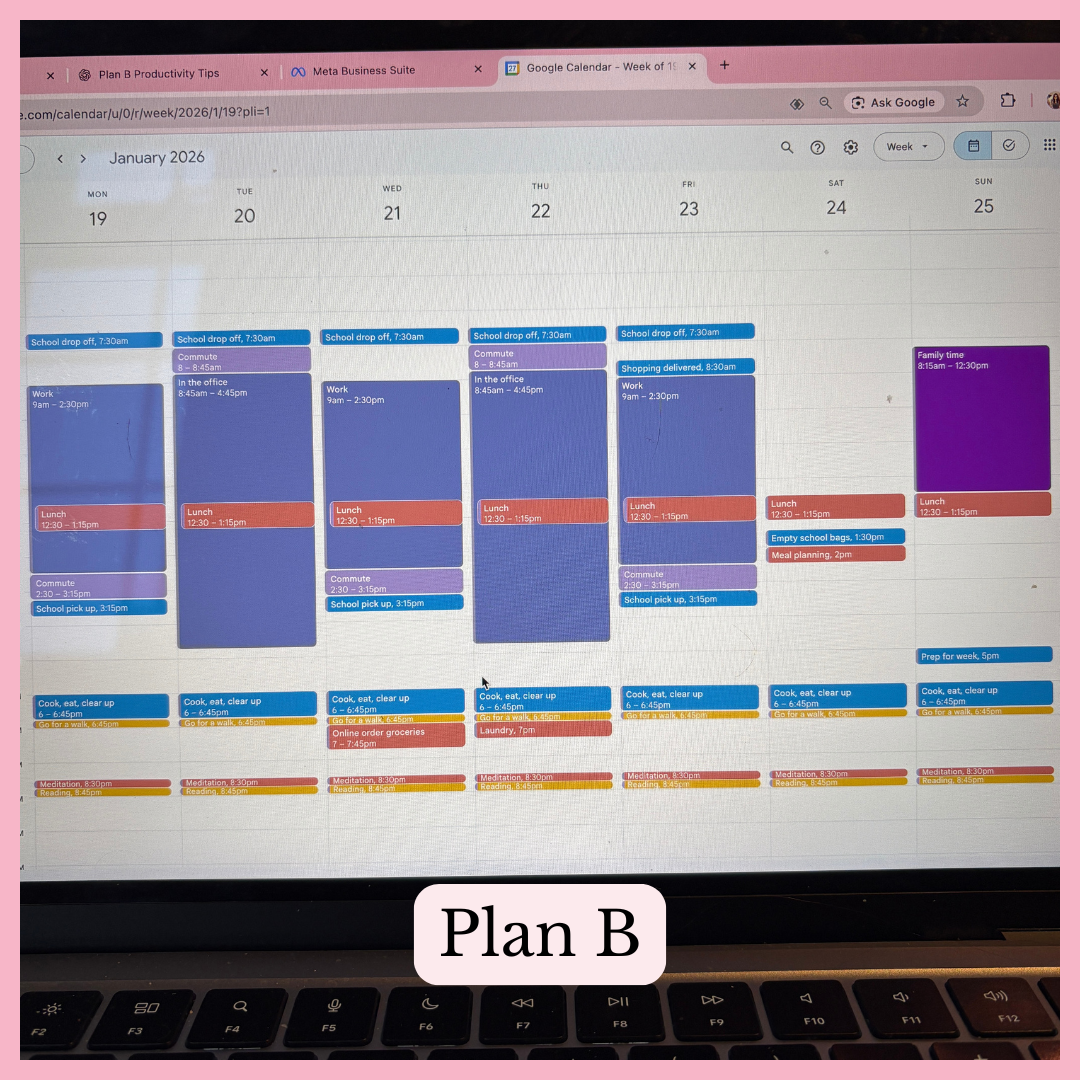
Plan B: The Essentials
Plan B is your backup. It’s the bare minimum that keeps life ticking over. This might include:
Going to work
School runs or caring responsibilities
Meals (simple is fine)
Walking the dog
One load of laundry
If Plan B is all you manage, that is not failure. That is still a functioning week.
Why Plan B works
The power of Plan B is that it’s decided in advance. You’re not negotiating with yourself when you’re already tired, stressed or disappointed. You already know what “enough” looks like. So when life throws a curveball, you don’t give up, you adjust.
You switch focus from “I can’t do everything” to “I’ll do what I can.” And that keeps momentum going, because progress doesn’t stop being progress just because it’s smaller than you hoped.
How to set this up in practice
You can do this in whatever way works best for you:
Two lists in a notebook
Two colours on one list
Two calendars in Google Calendar (one for Plan A, one for Plan B)
Some people even hide their Plan A when things feel full on, so they’re not constantly reminded of what they’re not doing. The goal isn’t perfection. It’s staying kind to yourself while still moving forward.
A quiet reframe that helps
If you take one thing from this, let it be this:
Plan B is not giving up. It’s choosing to keep going.
Some weeks will be Plan A weeks. Some will be Plan B weeks. Both still count and if you’d like support, ideas and accountability for making progress (even when life is busy) you’re always welcome to come and sit with us in The Coaching Circle Community.
