Why I’m Going Analogue in April
Apparently “going analogue” is a trend this year. I had no idea, but I can absolutely see why.
Have you noticed how often you reach for your phone without deciding to?
You open it to check the time and somehow you’re three apps deep. You sit down for “five minutes” and stand up twenty later. You check something you checked five minutes ago, just in case.
You’re not even looking for anything in particular. It’s just… habit.
And if you’re honest, you’re rarely fully off. Even when you’re resting, part of you is slightly alert. Slightly reachable. Slightly waiting.
I’ve been noticing it in myself too.
In February I was unexpectedly unwell for a week and completely wiped out. It happened at the same time a new business opportunity landed in my inbox, and instead of feeling excited, I found myself suddenly on edge. That reaction surprised me.
Lying in bed, away from my phone, something that’s been quietly bubbling away since December finally came into focus.
I am always “on”.
Not just busy or working hard, but alert and slightly braced, as if something might happen at any moment and I need to be ready for it.
When I look back, it isn’t surprising.
We’ve had Covid, lockdown and furlough ( that constant waiting to find out what was going to happen next). Then redundancy, retraining, starting and running a business. More recently, significant family health worries have been thrown into the mix.
Of course my system has learnt to expect the next thing.
But it’s a lot for one nervous system to carry and, if I’m honest, social media and screens aren’t helping.
The Constant Scroll
The average person now spends around seven hours a day looking at screens, and research is increasingly showing that rapid, fragmented content can shorten our attention span and affect our memory and focus.
When we constantly consume short bursts of stimulation (reels, quick videos, endless scrolling), our brains adapt. They become used to fast rewards, immediate feedback and quick hits of dopamine.
Because the brain is designed to maintain balance, it adjusts to that level of stimulation. Over time, it can become less sensitive, which means slower activities such as reading a book, taking a walk or learning something new can feel strangely dull at first. Not because they are dull, but because our baseline has shifted.
There’s even a term emerging for this reduced ability to enjoy everyday experiences after heavy digital saturation: digital anhedonia.
Now, let me be clear — I love parts of the internet.
I met my friend and business partner because of it. I retrained because of it. It keeps me connected in ways that genuinely matter.
But the scrolling is something different.
The constant checking. Watching how posts perform. Tweaking captions to keep up with what the algorithm wants this week. Reels? Carousels? SEO? Hashtags? Trending audio?
As a small business owner, visibility does matter. However, when social media isn’t the core of your work (when working with clients is) keeping up with platform demands starts eating into the very thing you are actually skilled at and it keeps me slightly on edge.
There’s a wider conversation happening about whether certain apps are addictive, particularly for young people. That’s a topic for another day. What I do know is this: I reach for my phone without thinking. I check things I checked five minutes earlier.
Whether that is addiction or simply habit, it’s something I want to change.
Social media feels less social now. More noise, more ads, more pressure to fit someone else’s mould and it’s exhausting.
Slower Stories
Recently I’ve been watching a few old-fashioned period dramas. The latest is Lark Rise to Candleford on the BBC. Whilst other shows, like Stargate SG-1, will always feel like home, there’s something about Lark Rise that genuinely slows my heart rate.
Perhaps it’s the pace, the in-person conversations, or simply watching life unfold without notifications interrupting every few minutes.
Life today is faster and, in many ways, easier and more connected. Yet somehow we are also more disconnected — from each other and from ourselves.
And that’s where hobbies come in.
Why Hobbies Matter More Than We Think
In 2023, a large meta-analysis looking at over 90,000 people across multiple countries found that those who regularly engaged in hobbies reported better mood, higher life satisfaction and even improved physical health.
Some creative and skill-based activities were linked to improved memory and cognitive function.
What really struck me wasn’t just the statistics, it was the idea of recovery.
Business psychologists often talk about “effort” and “recovery”. Work, responsibility and running a household all require output. We give energy constantly.
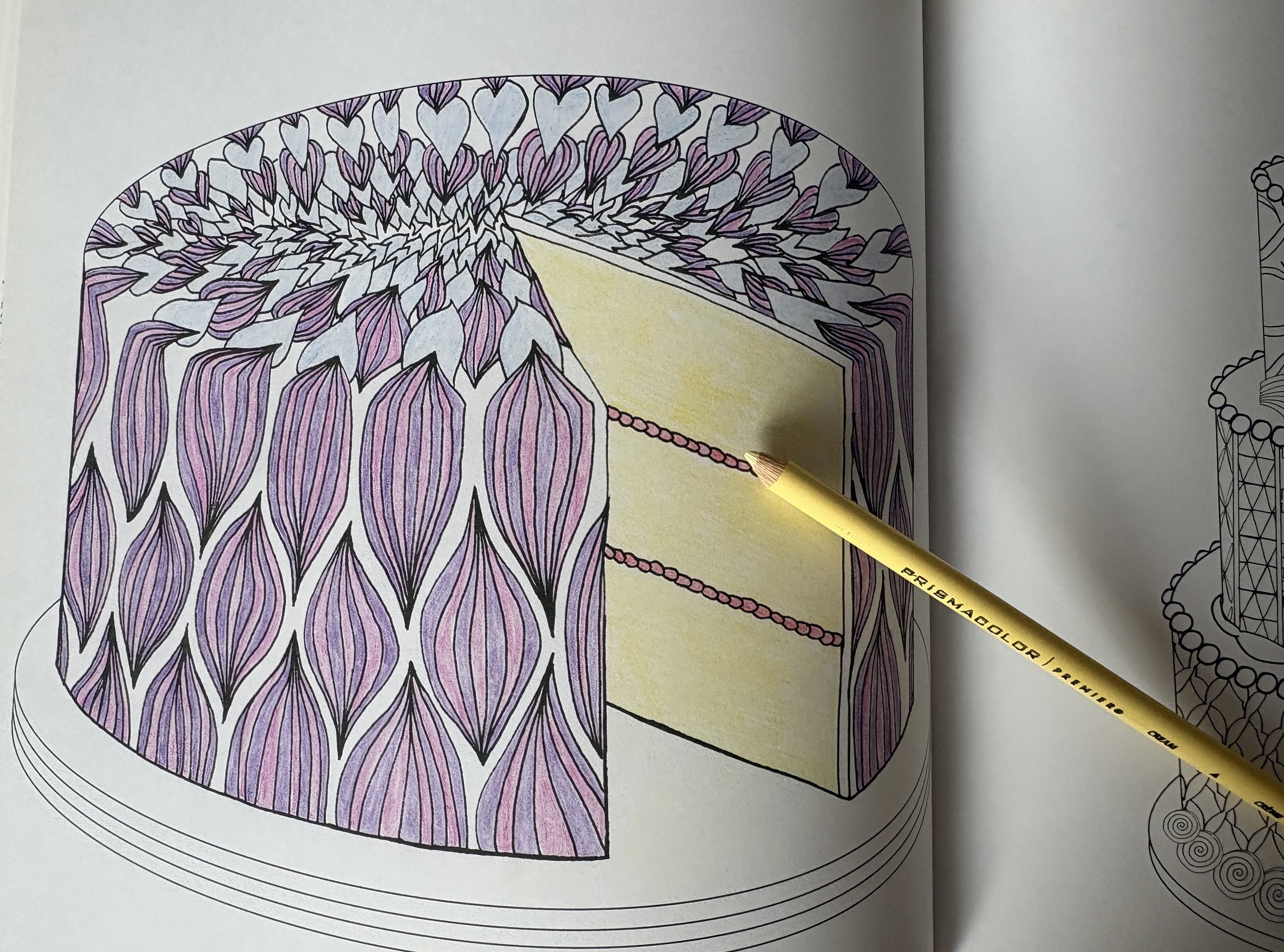
The right kind of hobbies do the opposite; they give something back. They help us psychologically detach from work, allow us to relax, and offer a sense of mastery and progress. They give us control over something that isn’t measured by metrics or algorithms. Crucially, they can help retrain our attention.
They provide a slower, steadier form of reward, think less junk food, more whole food, and I think that is exactly what I am craving.
What “Going Analog” Actually Means
This isn’t about throwing my phone in a drawer and disappearing from the internet.
I run a business. I enjoy my shows. Screens, when used intentionally, are not the enemy.
It also isn’t about buying a stack of aesthetic notebooks or expensive hobby kits.
For me, it’s about intention (which, fittingly, was my word for 2025).
It’s about asking, “Does this need to be online?”
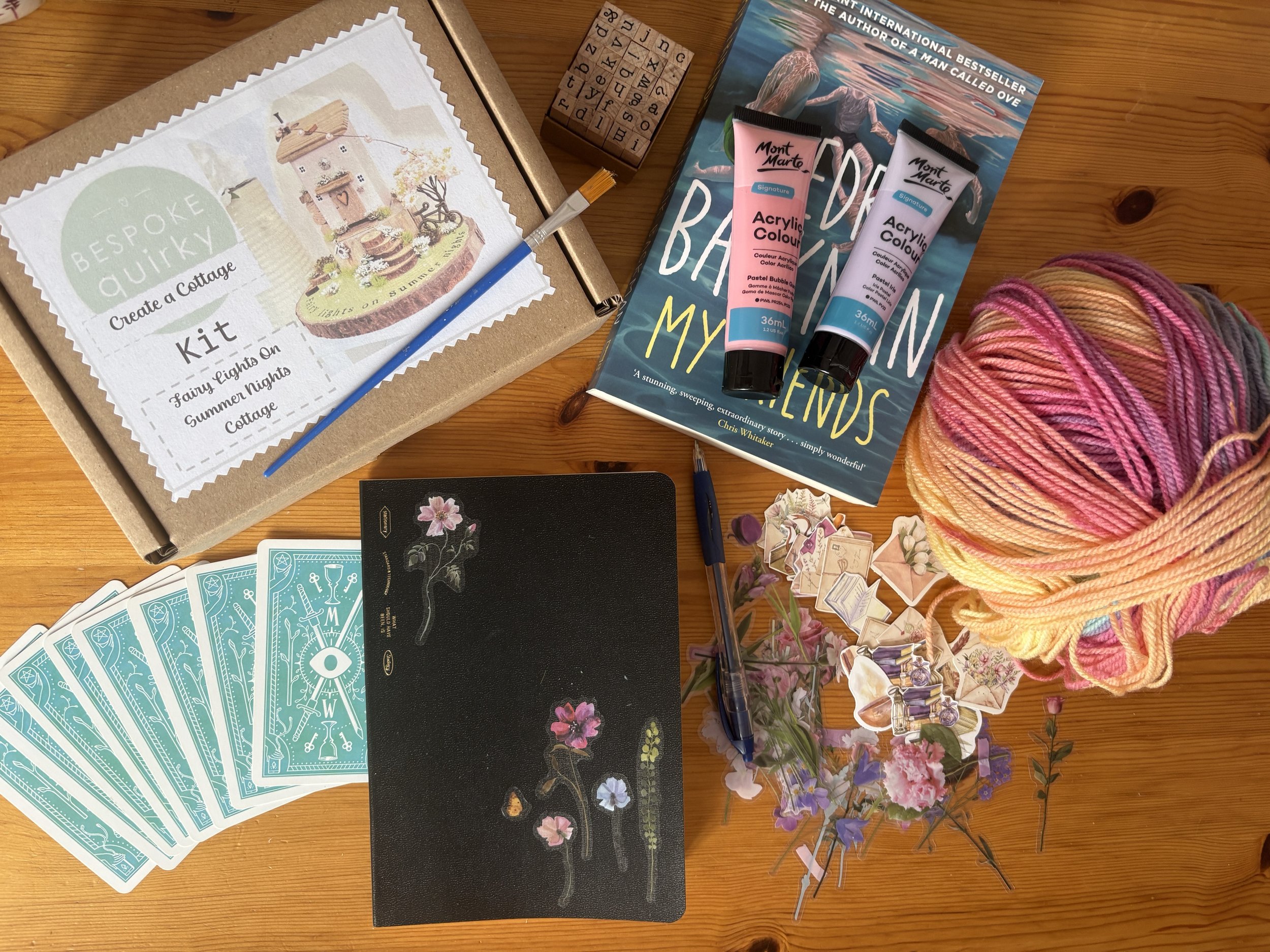
Some of the small swaps I’m making include using a paper habit tracker instead of an app, writing in a book journal rather than logging everything on Goodreads, and choosing a physical book over my Kindle when I can.
It’s about using my senses again such turning actual pages, feeling paper under my pen, letting my eyes rest on something that isn’t backlit, and doing something with my hands that doesn’t involve tapping or swiping.
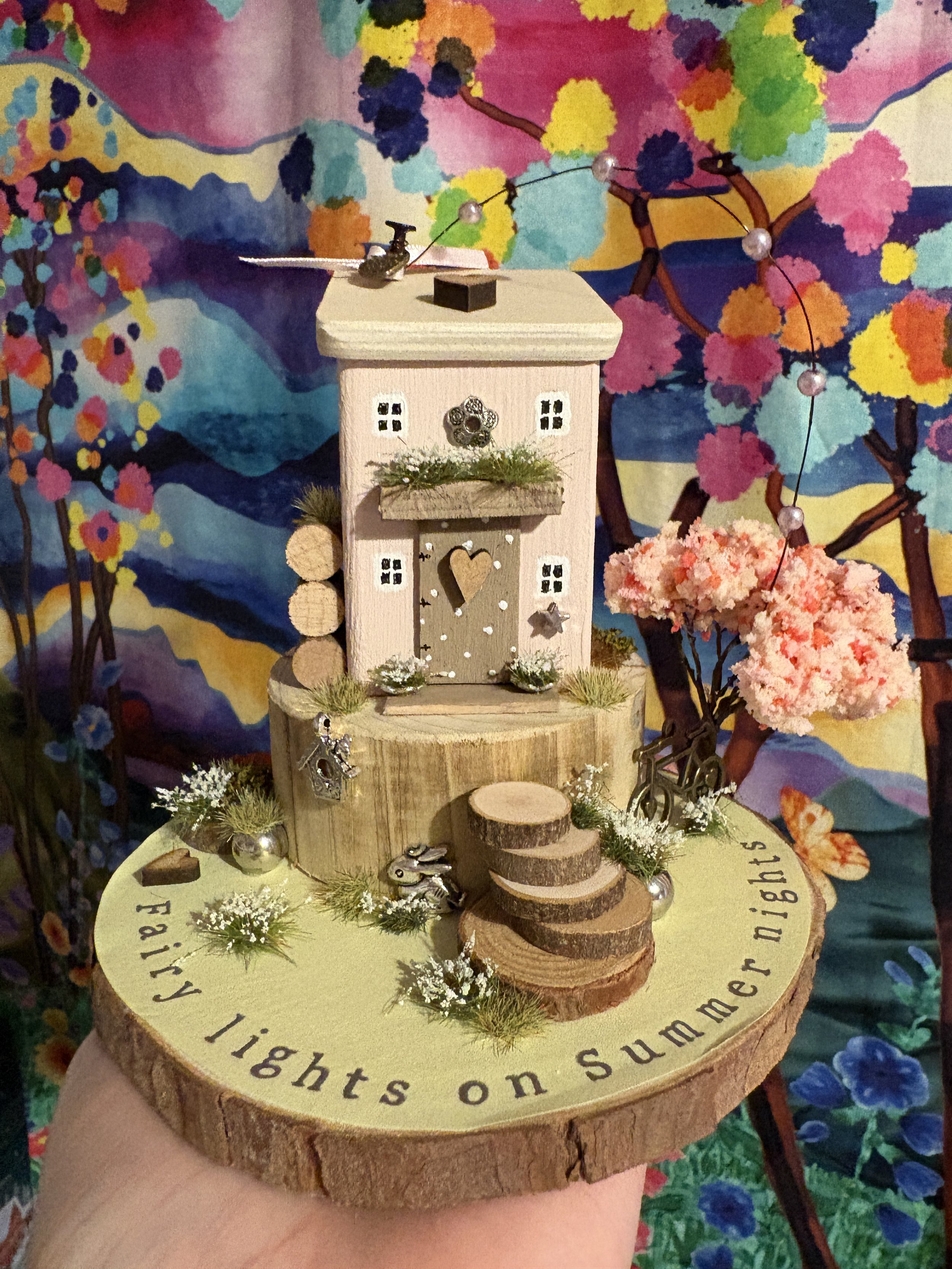
If you’ve followed me on Instagram, you’ll know I make those tiny cottage kits. I love them; the creativity, the satisfaction of finishing something, even getting my hands covered in paint (the superglue less so). That tangible feeling of creating something real is what I want more of.
I want to be fully in the room I’m physically in.
This Isn’t About Productivity
I’m not doing this to become a better morning routine person, and I’m certainly not doing it to optimise my time.
I’m doing it because I don’t want to live in a constant state of low-level alert.
I want space. I want slowness. I even want a bit of boredom.
I want my body to remember that not everything requires an immediate response.
Maybe You’re Feeling It Too
If you’re honest, are you ever truly off? Or are you always slightly reachable, slightly checking, slightly performing?
What would it look like to reduce (not eliminate) your screen time for a month? Even just a little.
Where could you swap one scroll for something tangible? One app for one page. One notification for one quiet cup of tea.
April feels like a good month for a reset, a gentle return to ourselves.
If you’re craving something similar, you’re very welcome to join me.
Going Analogue in April (Together)
Inside Project Sparkle this April, we’re turning this into a gentle month-long experiment.
Not a full detox. Not a productivity sprint. Definitely not a competition. Simply small, tangible moments that bring you back into the room.
Each day there will be simple analogue prompts such as starting a book journal instead of using Goodreads, writing a letter and actually posting it, meeting a friend for coffee rather than sending voice notes, reading a chapter of a physical book.
Nothing complicated or expensive. Nothing that requires you to overhaul your life.
Just small swaps, swapping the scroll for paper, the notification for noticing, noise for texture.
There will be creative prompts, reflective ones, playful ones, and space to share what you begin to notice as that low-level digital hum quietens.
If you’ve been craving something slower and steadier, something that feels like you again, then this might be exactly what you need.
Project Sparkle will be our little analogue corner of the internet and yes, I’m aware of the irony.
You don’t have to disappear offline completely. Just become more intentional with how you use it and how often you step away from it.
